



Running with Chisels Vol. 22

Vol 22 | October 16, 2025
In this issue Dave discusses the new class schedule for 2026, a visit to the Victoria and Albert Museum in London, and a philosophy of teaching that led him to teach marquetry using a scroll saw.
Class Update – 2026 Schedule
I’d like to thank everyone that took a class this year. I’ve had more students this year than any previous, and I appreciate your support.
If you think of any classes that you would like me to teach, please reach out. I’m always open to a new topic.In the meantime, I have a schedule for next year through August. It is now posted on the website.
There are a few changes this year. I have not been happy with the flow of the Painting with Wood class. The second picture doesn’t get the time it deserves. In addition, the second picture is more complex but I’d like it to include some additional learning opportunities.
Therefore starting in 2026 the Painting with Wood class will be three days long. This will allow us to make a more interesting second picture that includes deeply incised cuts and more complex sand shading, after learning the basics of sand shading on the first picture. I feel that this will allow newer marquetarians a higher starting point on the learning curve.
I encourage you to check out the schedule and see if there is anything that fits for you. I’ve only scheduled the first half of the year so far, so now is the time to speak up if you’ve been waiting for the right time to take a class!
In this edition of Running with Chisels:
- Learn from the best: the V&A
- Tech(nique) Topic: On cutting veneer, and why I teach scroll saw marquetry
The Victoria and Albert Museum
The V&A is in South Kensington in London. It came out of the Great London Exhibition of 1851 as the Museum of Manufacturing, and was intended to show “practical” art, as opposed to Fine Art. It is the largest Decorative Arts Museum in the World, though the Musee des Arts Decoratifs in Paris has more furniture. If I could only go to one, I’d choose that one, but in the rest of the world I’d choose the V&A.
There is not only amazing furniture (eastern as well as western), but also jewelry and Islamic windows and interiors, Japanese items, tiles, pottery, wrought iron and glassware. In fact, I mostly go to the V&A to look at those other things – their furniture is fine but not in the same league as the Wallace Collection in London and definitely not with the Paris Decorative Arts museum. The jewelry though is awesome, and scaling up the designs generates cool marquetry patterns.
I only took 483 pictures there this visit. Here are a few that I found inspiring:
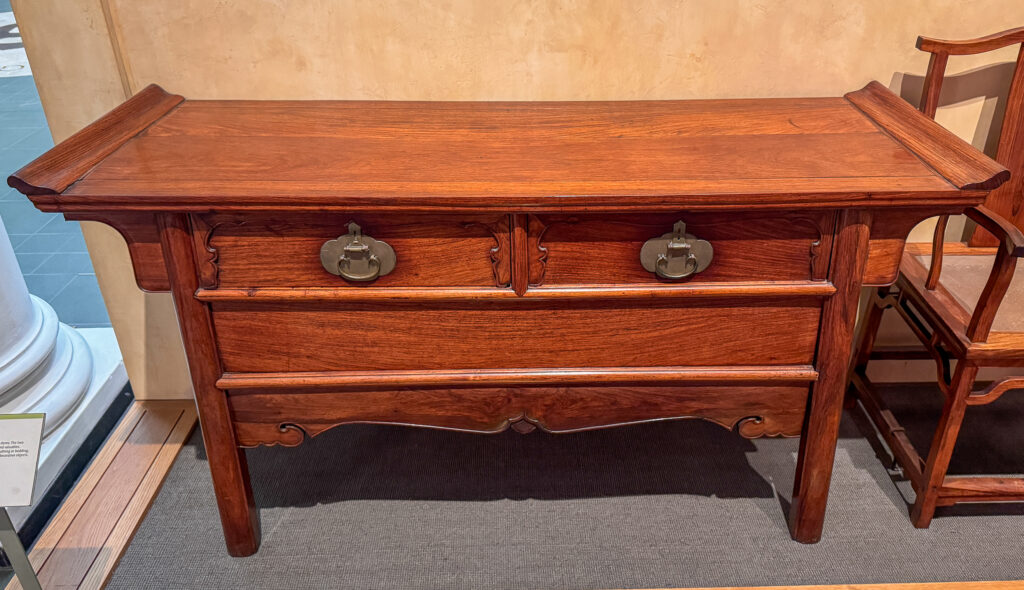
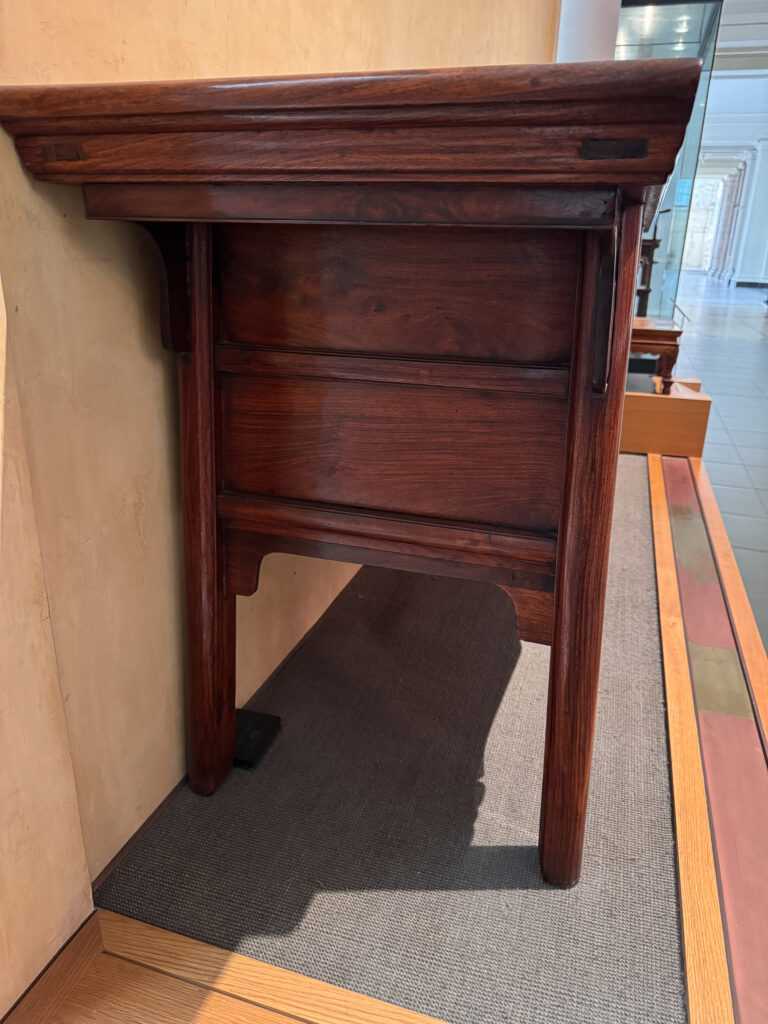
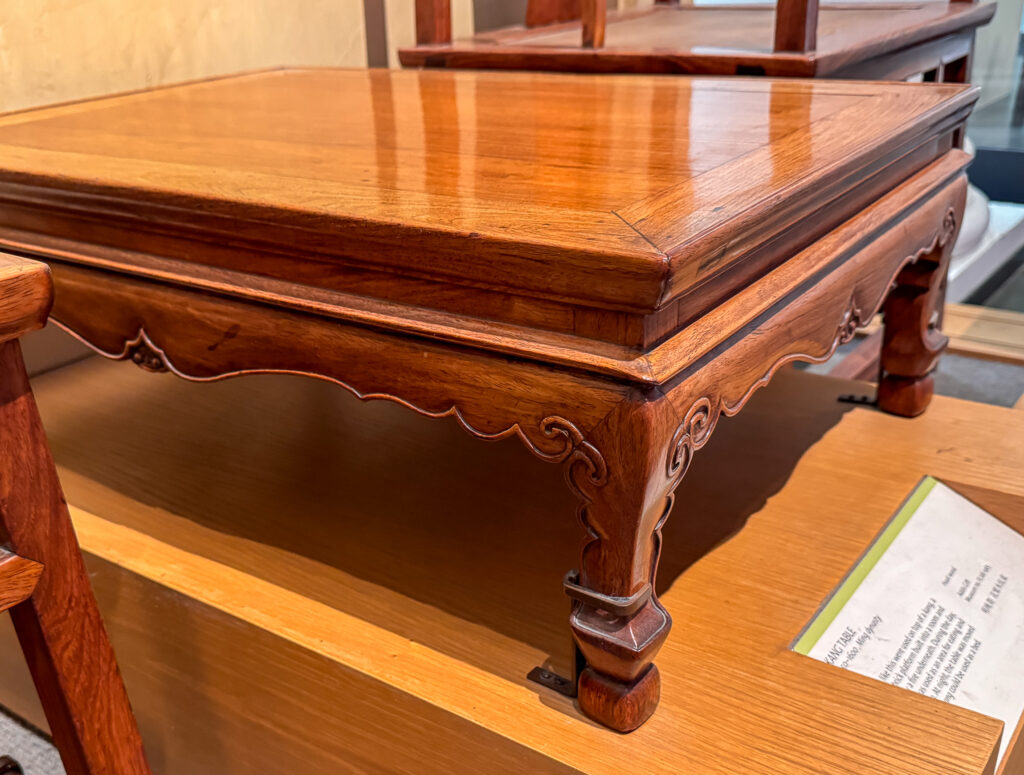
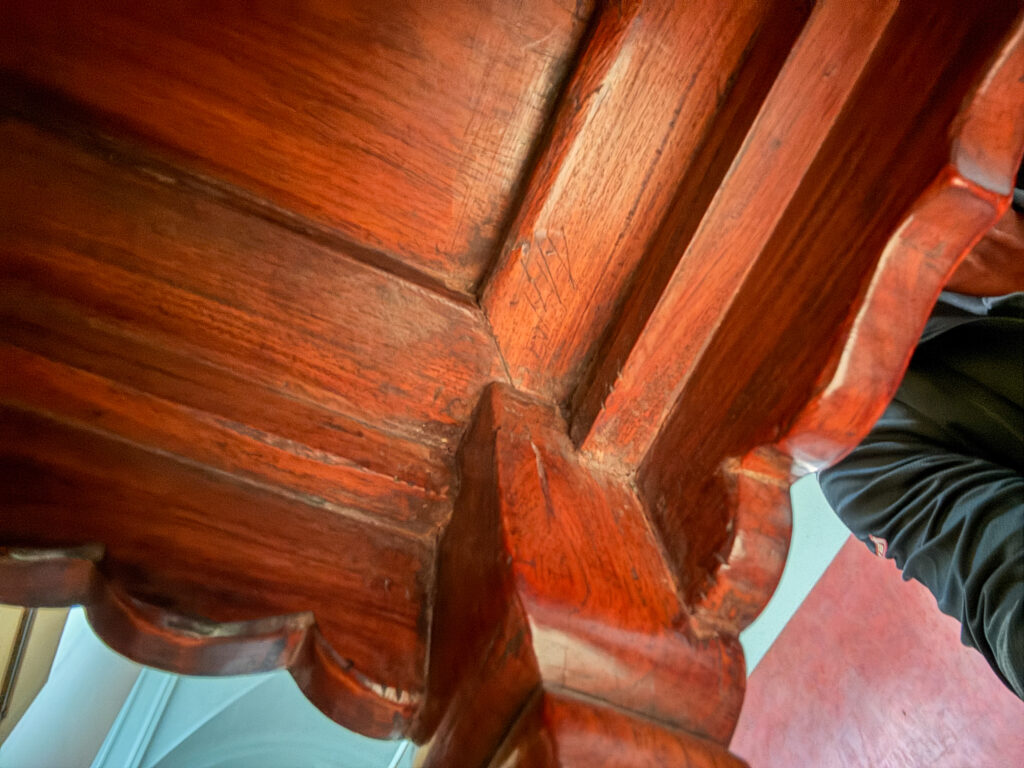

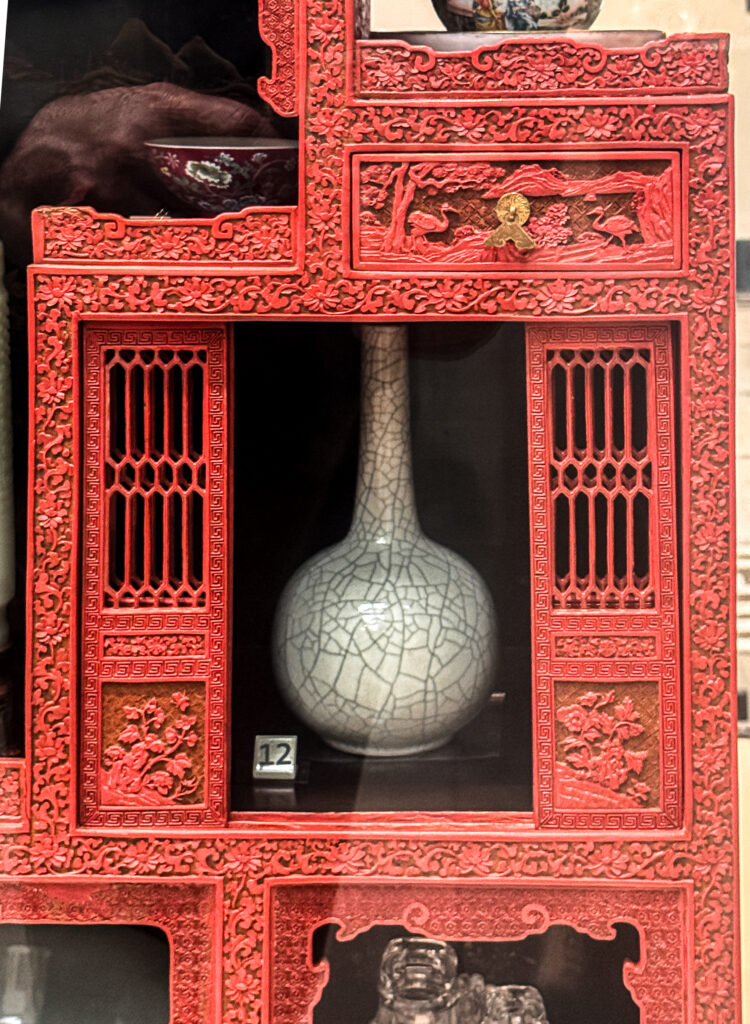
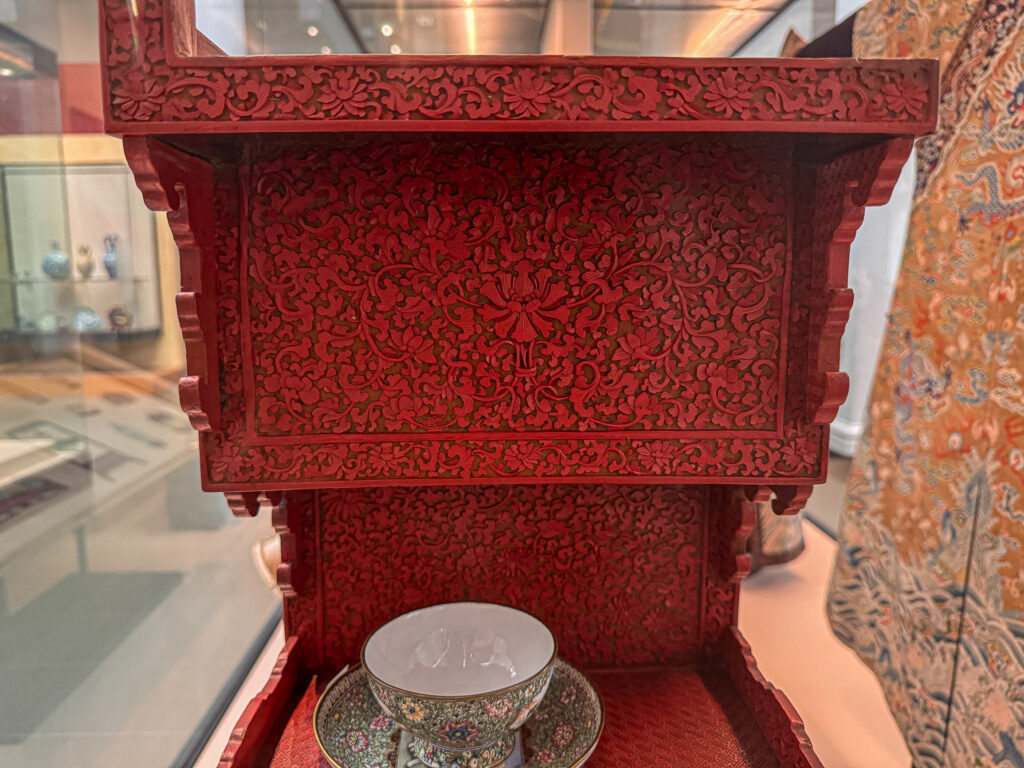
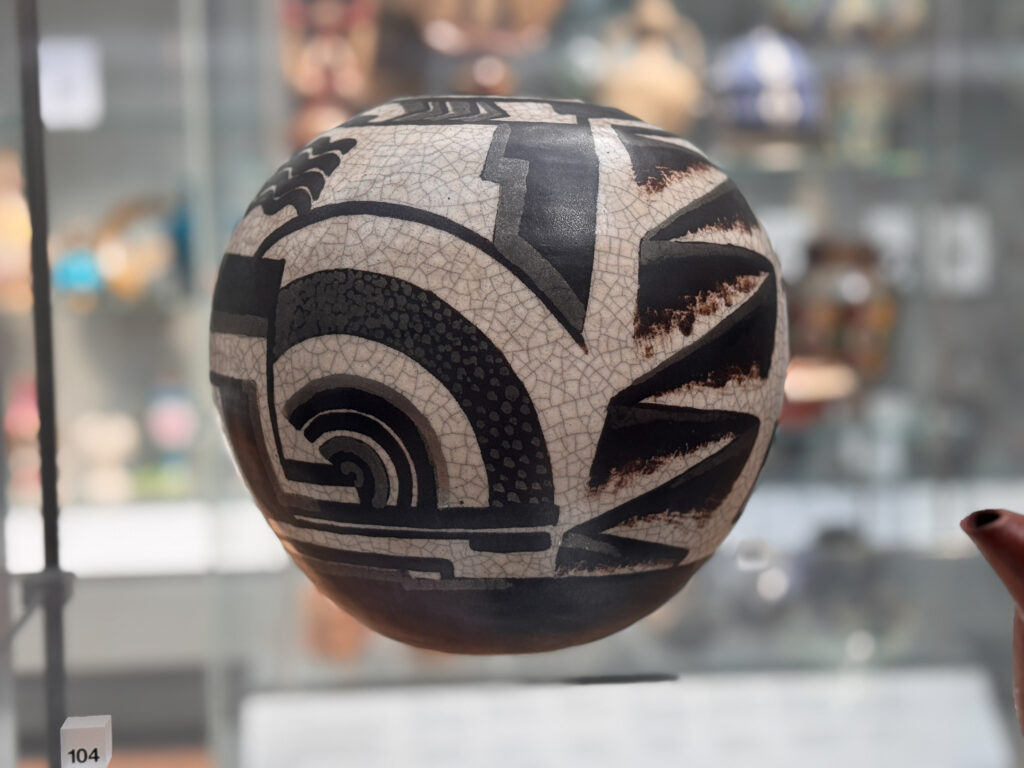
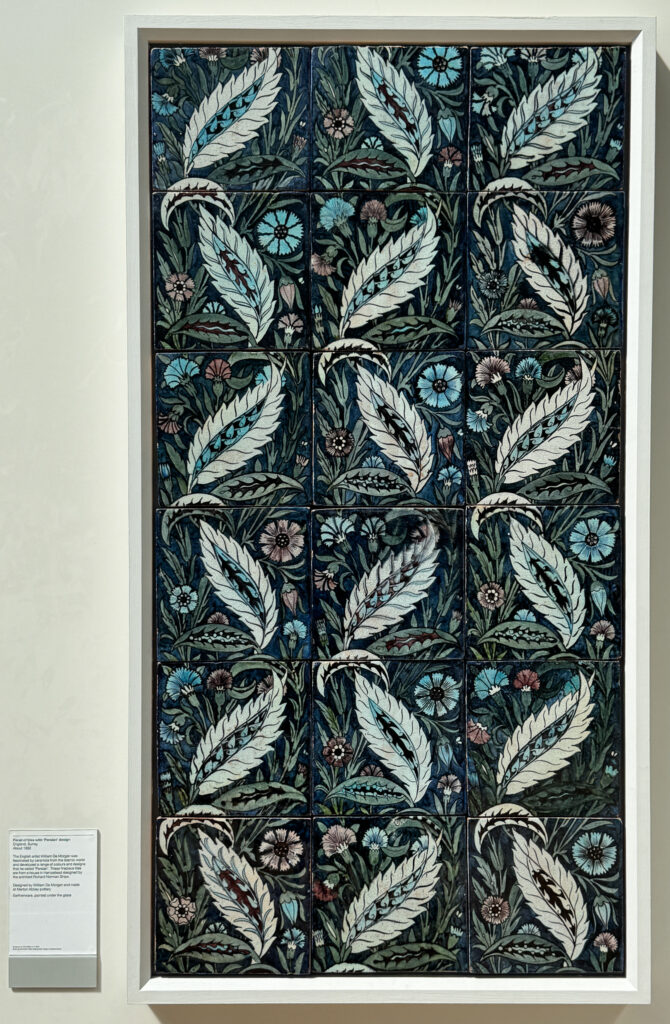
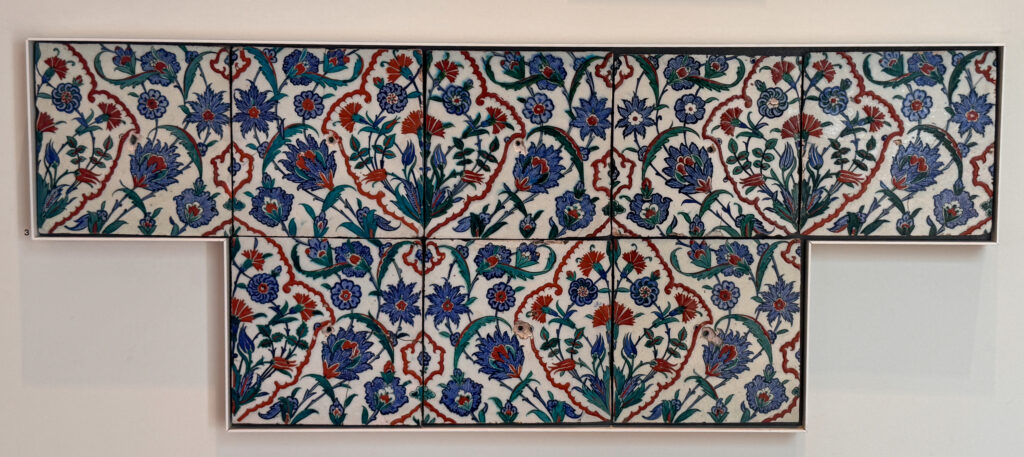
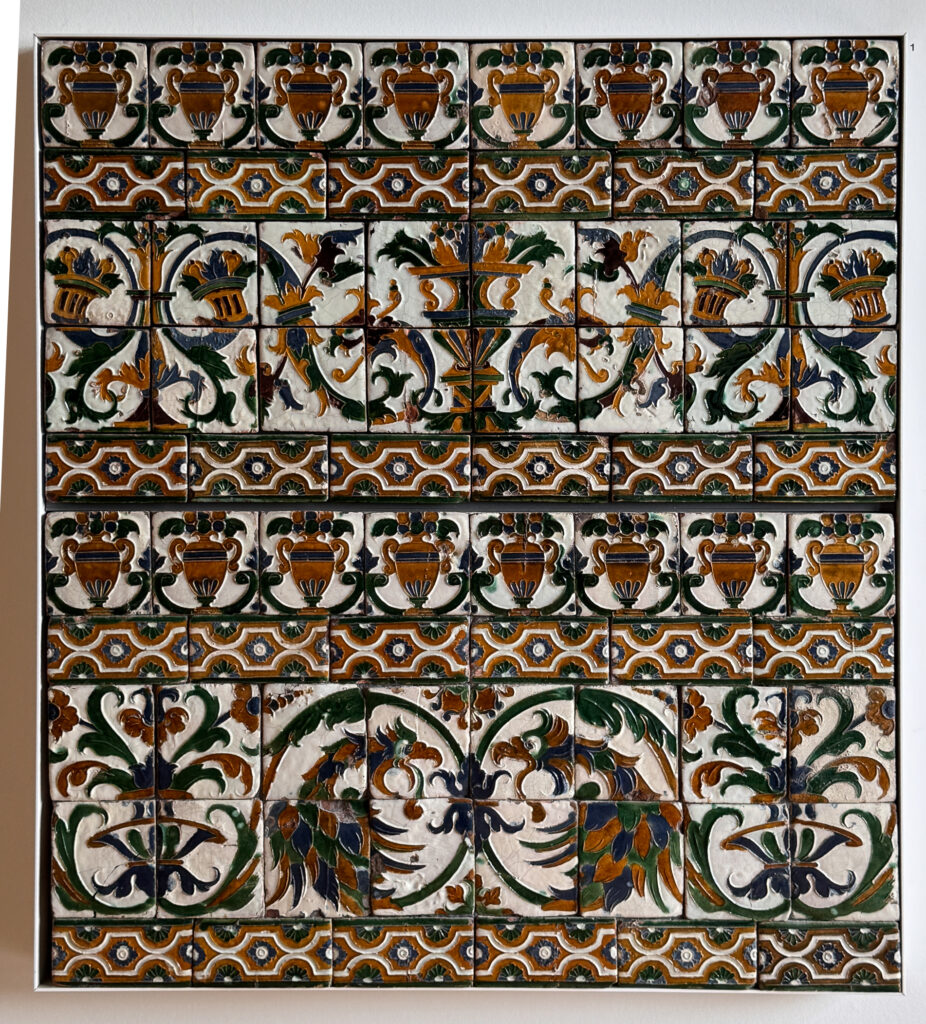
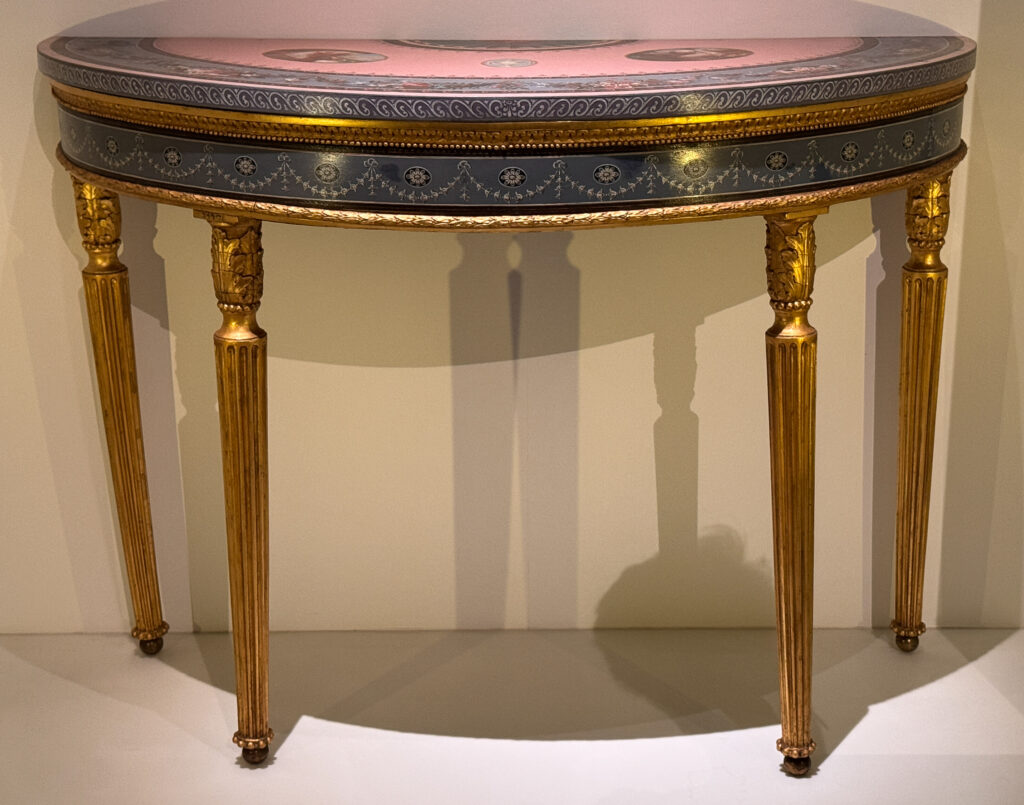
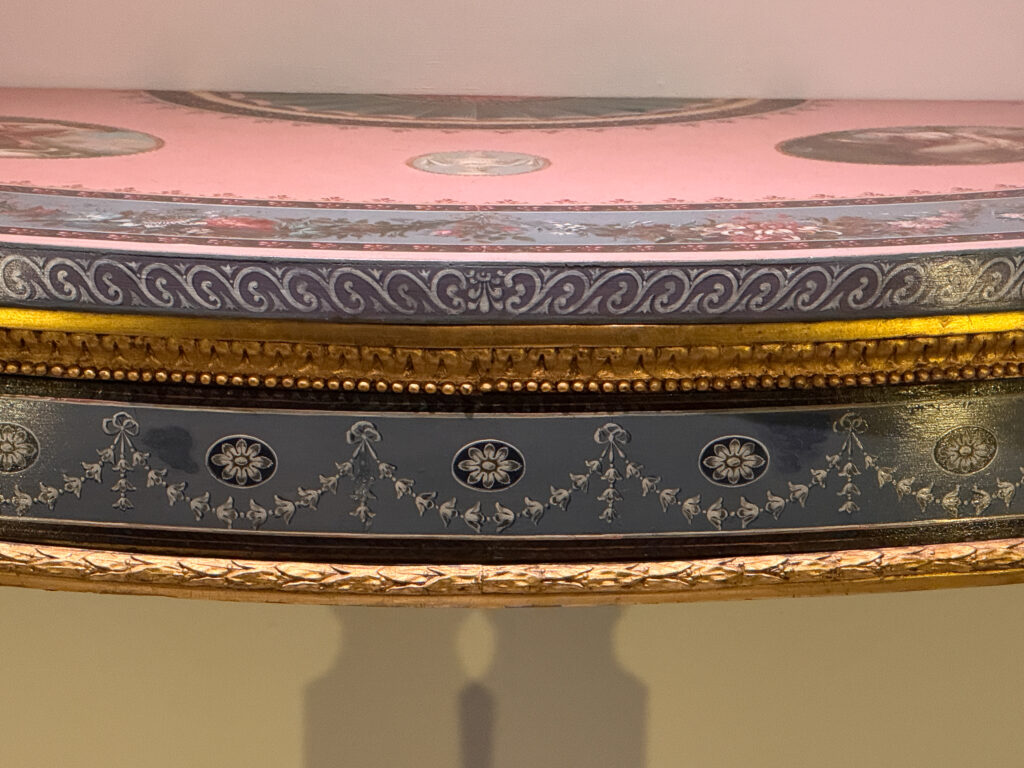
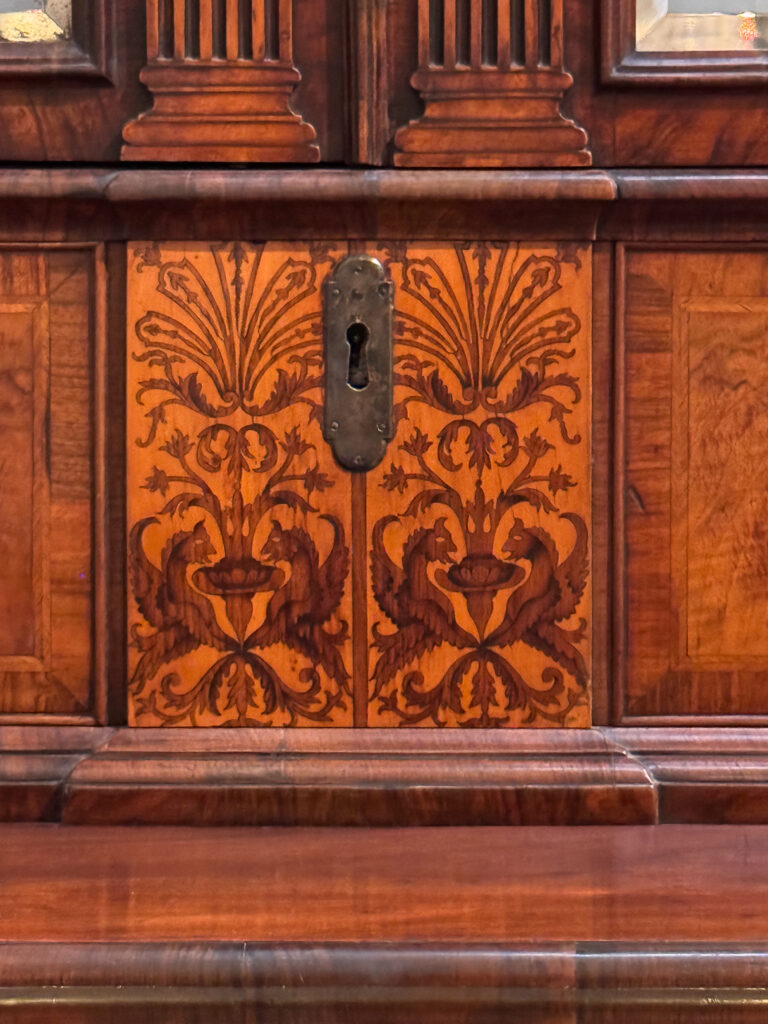

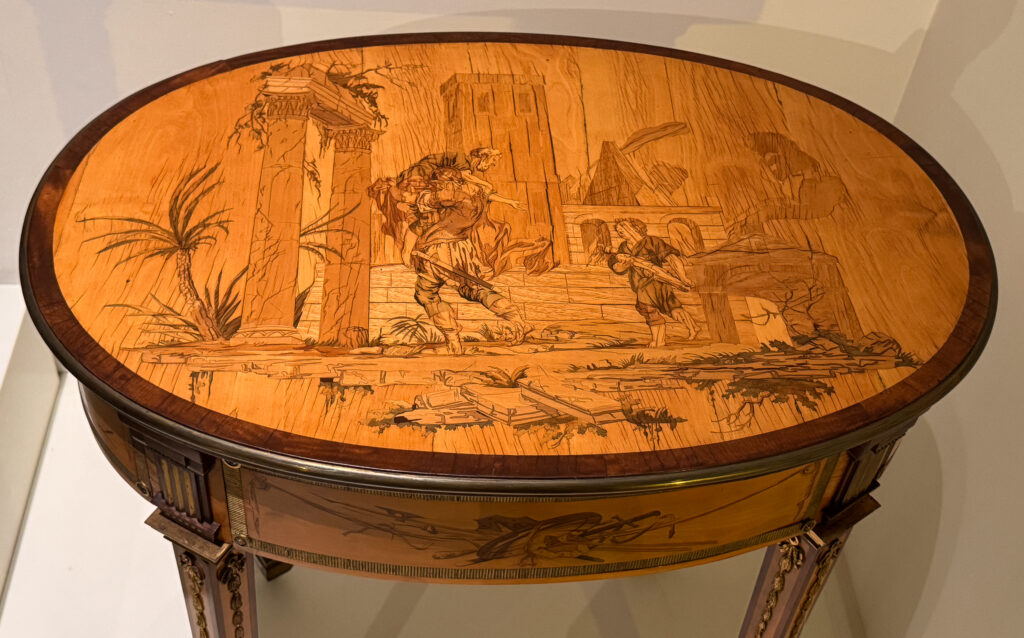

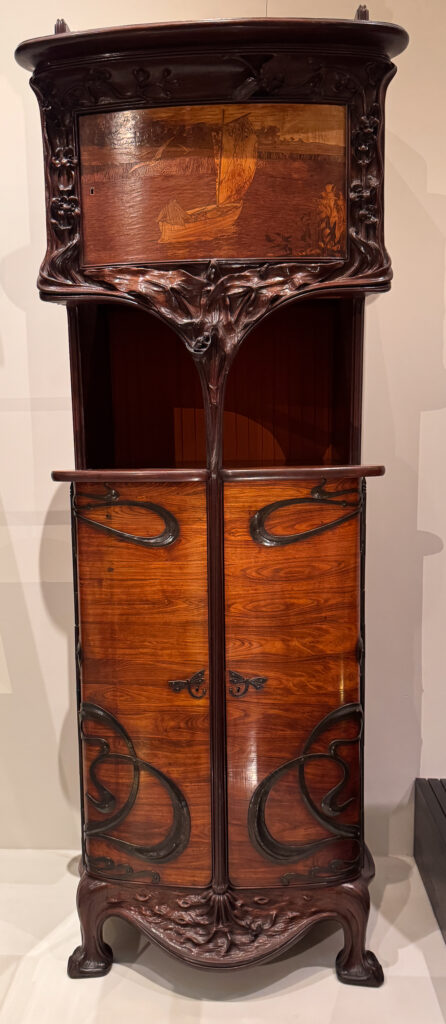
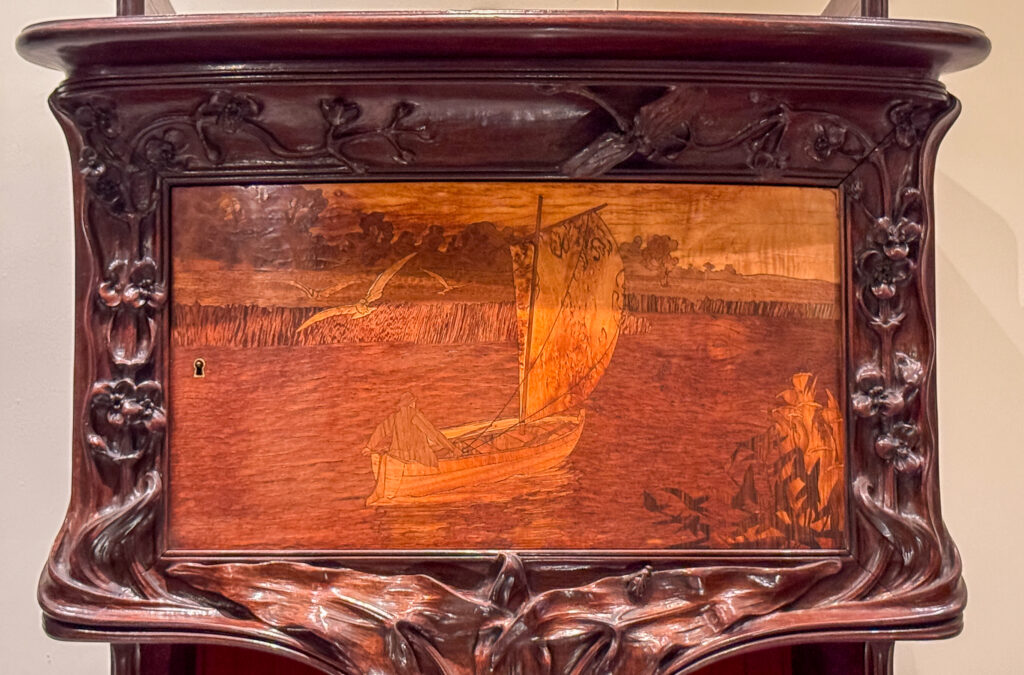

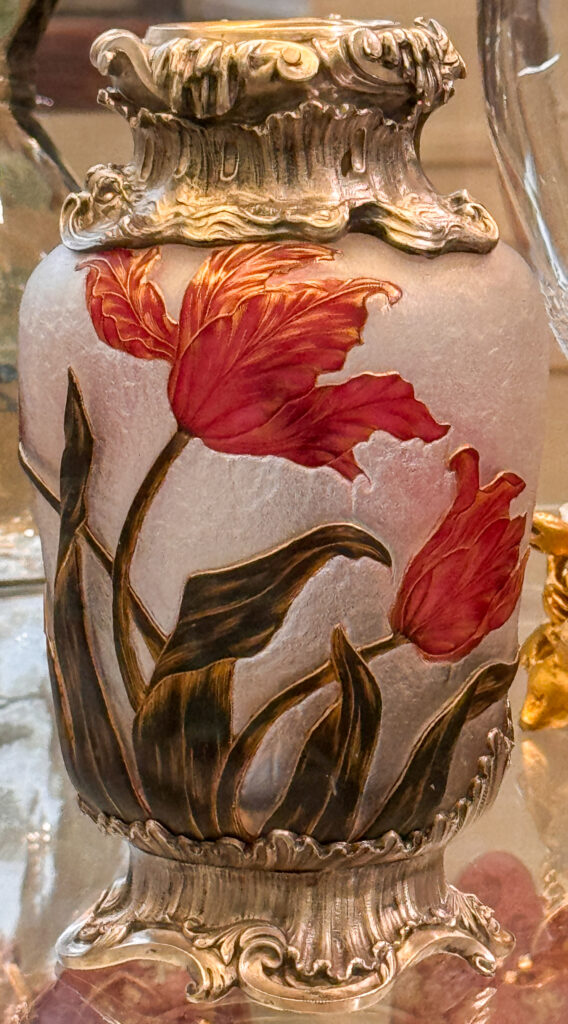
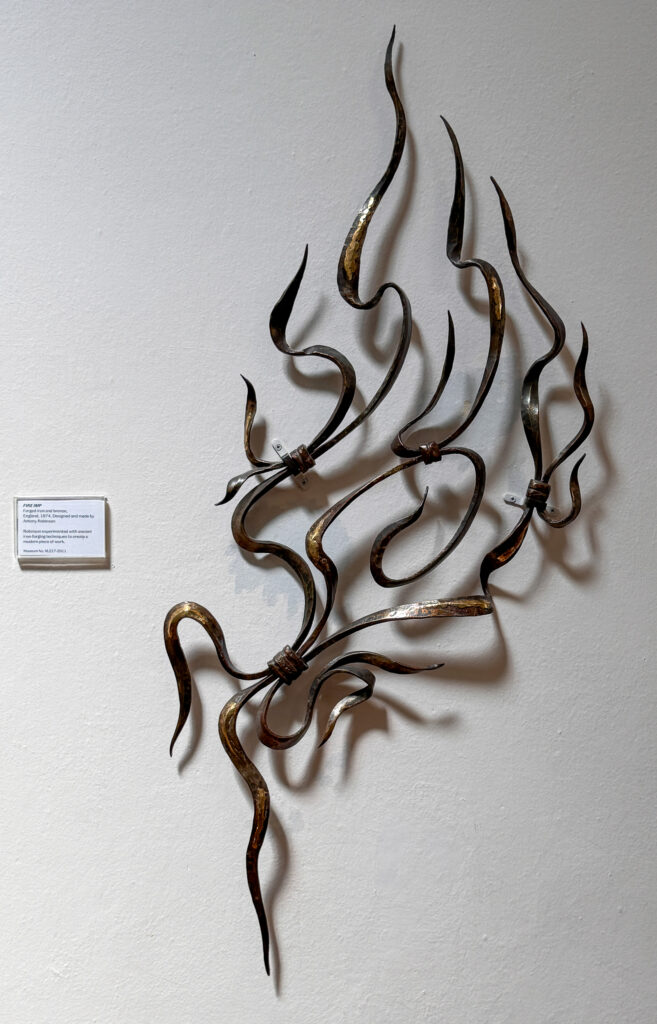
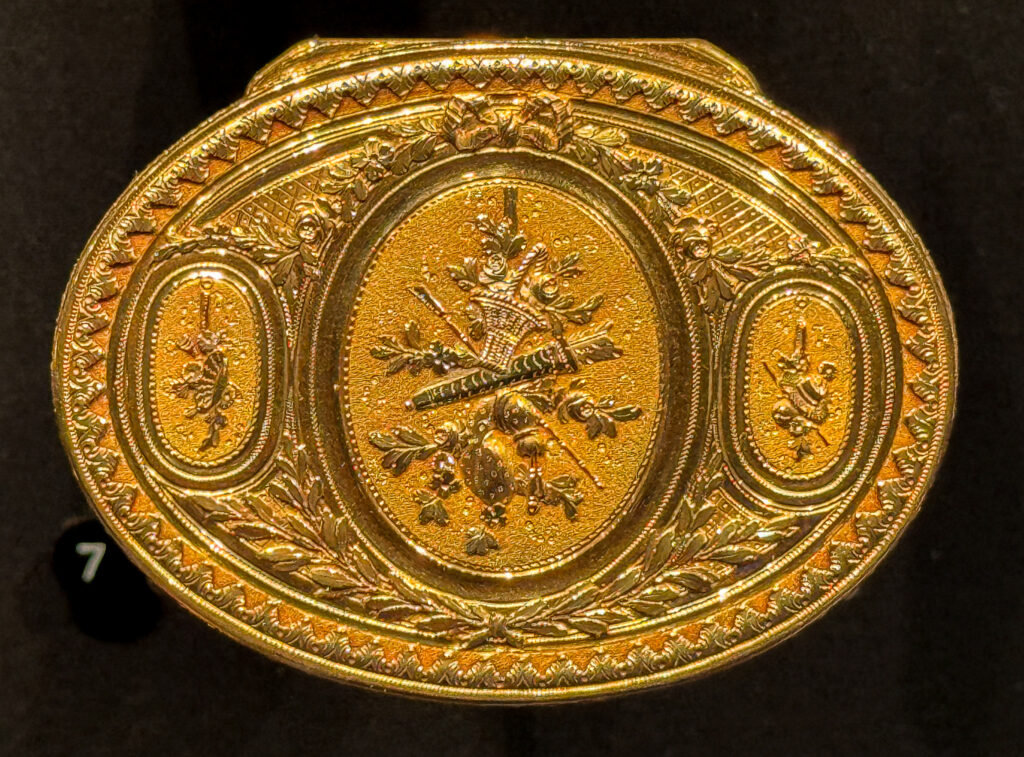
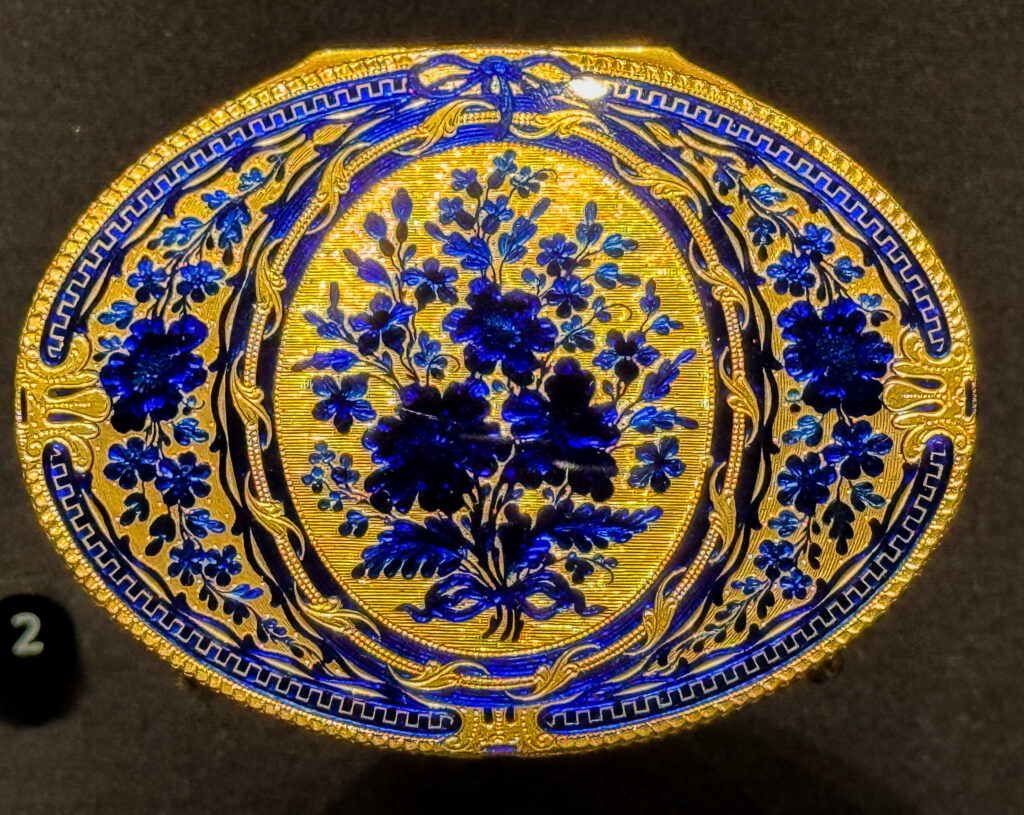



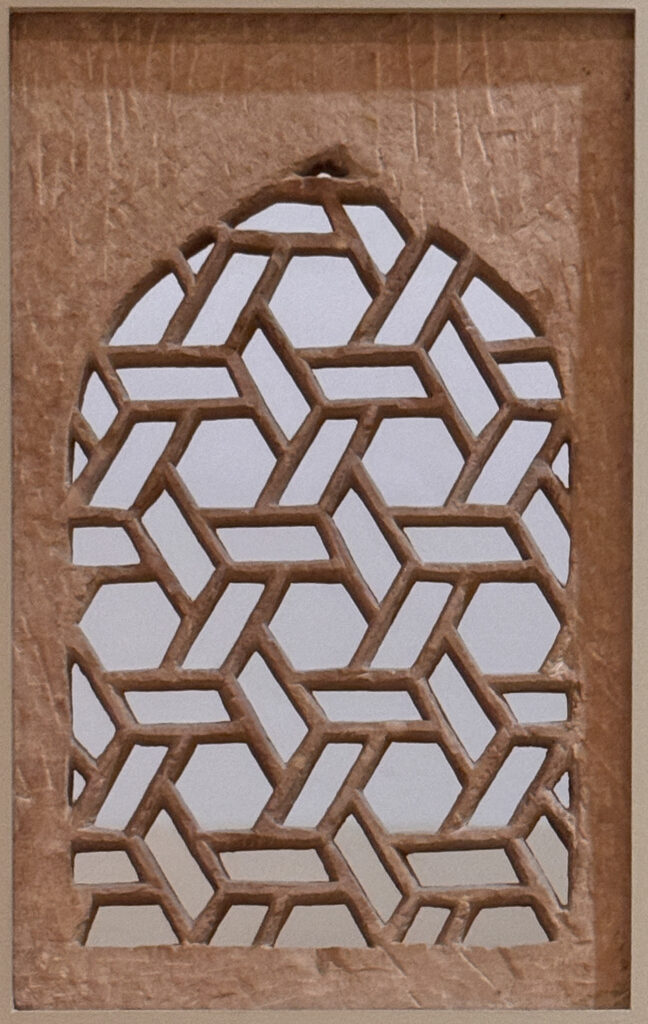
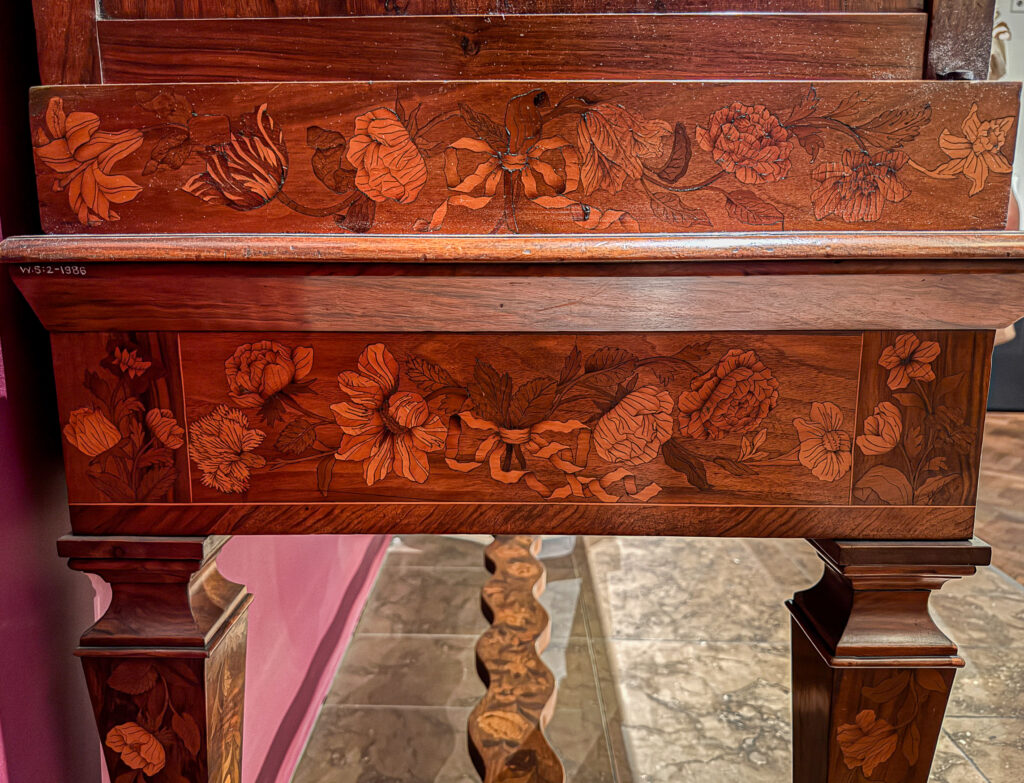
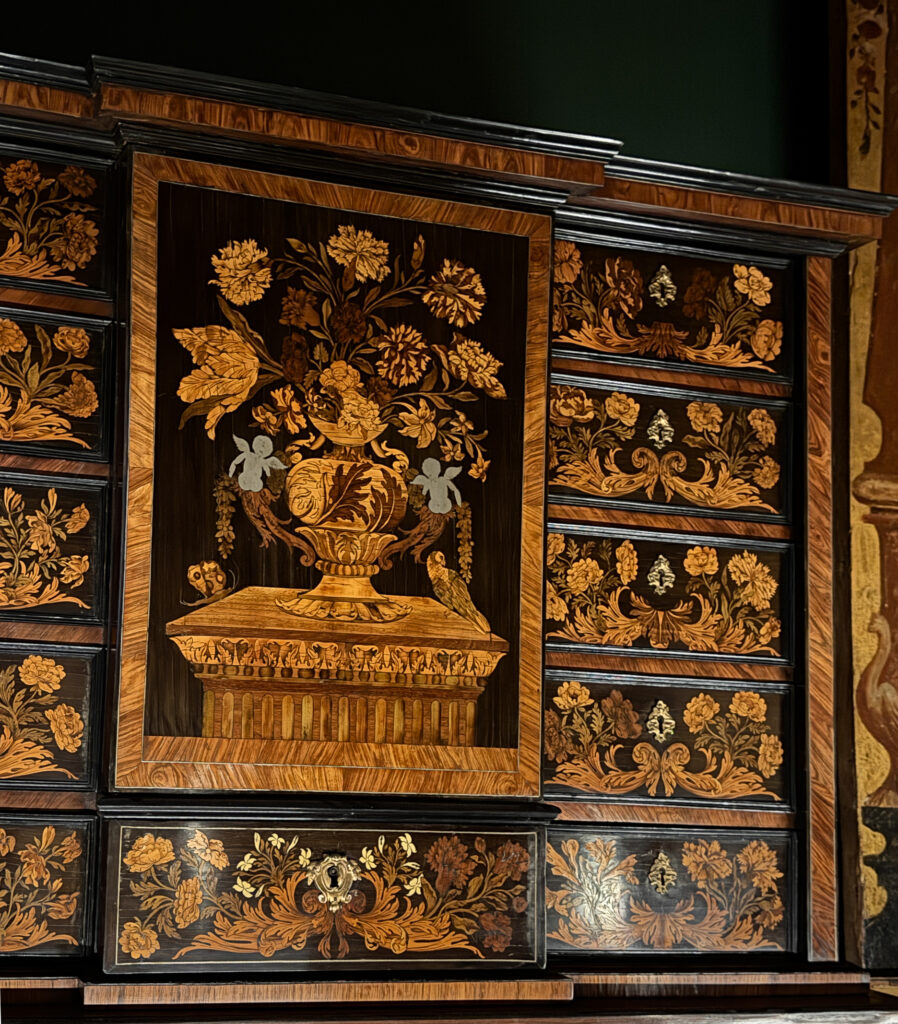
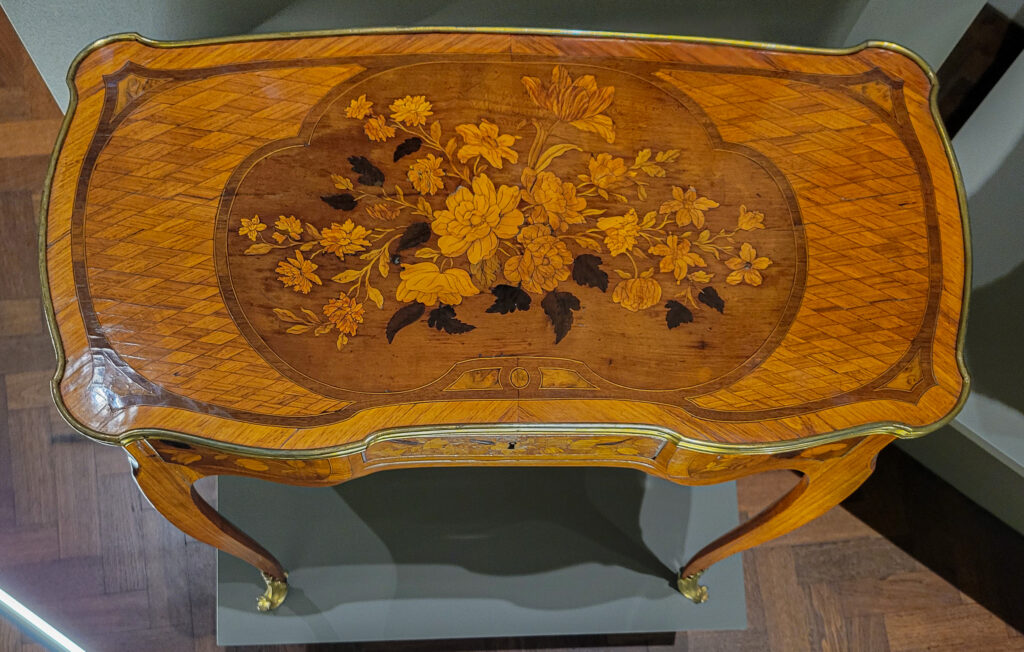
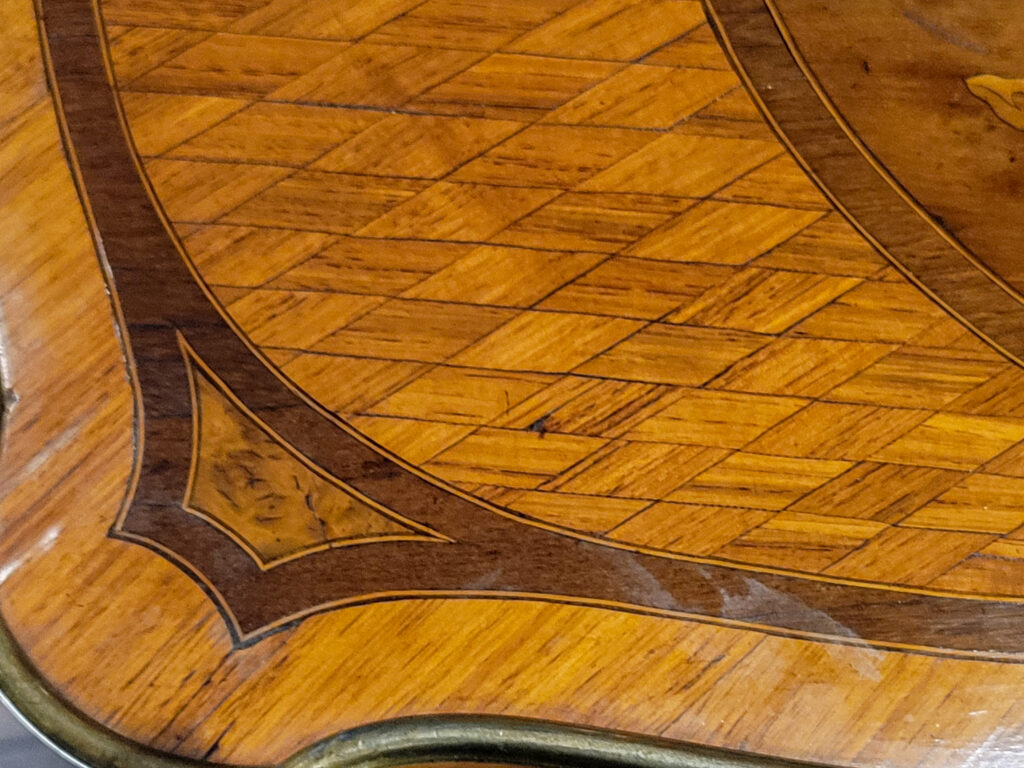
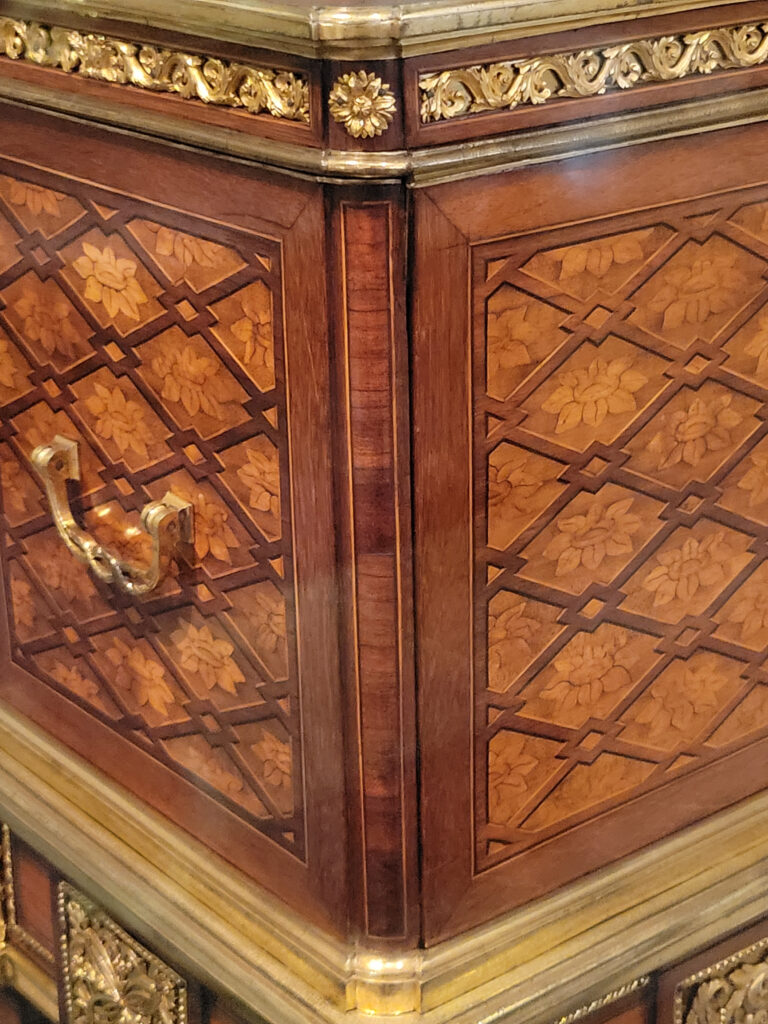

Email me if you’d like more information about any of the above, happy to share with you what I know.
Why I teach scroll saw marquetry
My first marquetry learning experience was a five-day double bevel marquetry class in 2002. It was a great experience, and much of what and how I teach is based on that first class. Sometimes you learn what works, and sometimes what doesn’t. Both are valuable.
We learned to cut thick veneers by hand, the angled birds mouth technique. There were 12 people in the class, and at the end of the week five of us were proficient. On the last day of class, the instructor allowed a couple of us to use the scroll saws which were in the next room. I bought a DeWalt scroll saw based on that. The efficiency increase was substantial. I remember thinking that all twelve of us would have been able to do that, compared to five the other way.
I then went home and spent several months cutting thick veneer. We had two teenagers and full-time jobs, so I only had a couple of hours each week for woodworking. It took a long time to have enough species and sizes to be able to make what I wanted.
I made several pictures and inlays from my thick veneers, both by hand and using the scroll saw, and reflected. Should I continue to spend most of my time making veneer, or pictures? I decided that I would rather spend my time making pictures, and this would also allow me to take advantage of the enormous range of species available as commercial veneer.
Some of the techniques had to be modified to support the thinner and less robust commercial veneer. Success was not immediate but with practice things worked out, and I made many pictures over the ensuing 20 years, with techniques evolving as different problems arose.
The techniques I teach are the results of that experimentation. As I’ve commented in class, my methods continue to evolve. The current techniques include many improvements brought about by students saying – why don’t we do something this way instead of that? Sometimes I explain why that’s not a good idea, and sometimes I say – because I never thought of that. Let’s try it. Some good things have come out of it.
After using the scroll saw for some years, I felt that the machine was limiting the precision of some of my cuts. I went to the American School of French Marquetry and learned to use a chevalet, which is an 18th century hand powered scroll saw. It combines the precise cutting control of hand powered cutting with the guaranteed vertical blade of a scroll saw. The saw was designed for packet cutting. I came home and made my own from their plans. For several years that was the only saw I used. When I converted back to double bevel I put it away, though I could (and will, one day) modify the jaws so that I can cut at an angle. It is superb, though it’s hard on the shoulders and elbows.
In terms of cutting, the chevalet is the most precise approach for packet cutting at least. The scroll saw is fast and consistent. Hand sawing takes the most skill.
I didn’t even mention using a knife to cut the marquetry. The technique uses a scalpel to cut through the veneers, cutting the foreground and background pieces separately. Amazing precision is possible, though smooth shapes are easier to cut consistently, similar to stained glass. Some outstanding work is done by knife workers. I have used this technique when crispness is critical, such as for initials. However, I have carpal tunnel in my wrists and tennis elbows in both elbows, so this technique is not viable for me. I don’t teach it because my elbows don’t always allow me to do it.
I choose to teach with a scroll saw so that there is a pathway for all of my students to become competent marquetarians using commercially available tools and materials. As a craftsman progresses along their learning path, these other approaches are available, each with their own advantages and disadvantages. I personally like to have all of the techniques at my fingertips so that I can use the most appropriate one, but the one I use most frequently is the scroll saw.
return to the running with chisels archive
return to top
©️ 2025 Heller & Heller Furniture | Privacy Policy | Terms
